Skip to content
Volvo

Volvo Group positions itself as a climate leader, but its words don’t match its actions. In 2019, Volvo became the first global automaker to produce heavy-duty electric trucks. This is a true achievement. Yet, the company continues to prioritize diesel trucks—missing a critical opportunity to lead the industry toward a cleaner future.

Company Name

Volvo Group

Headquarters

Sweden

Brands Owned

€44.5B

reported net sales in 2025

€3.2B

reported net profits in 2025

202,911

trucks delivered in 2025

2.0%

of sales were electric trucks

Data from Volvo 2024 annual report

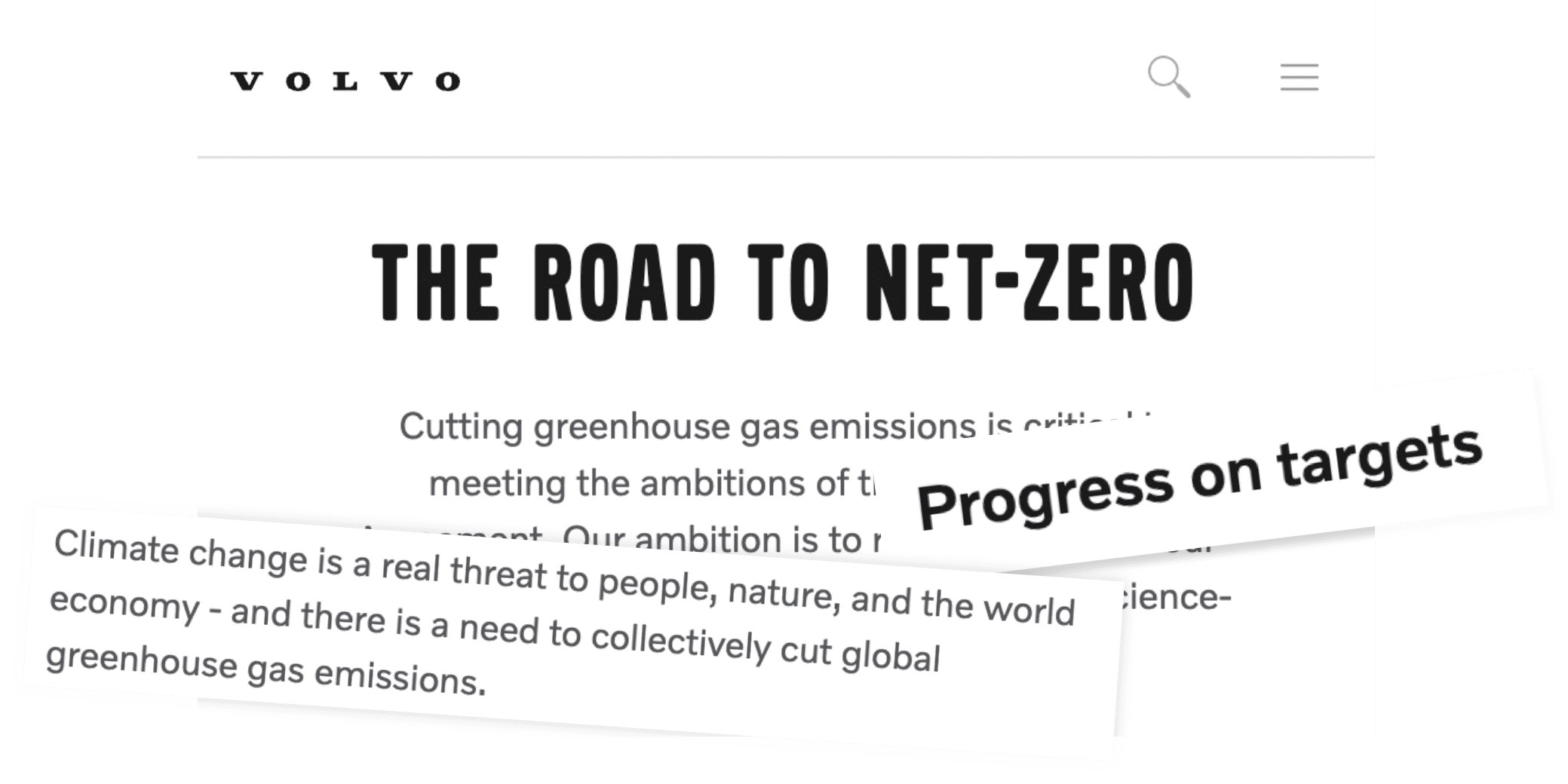
Excerpts from Volvo website.

Volvo: Keep your promises.

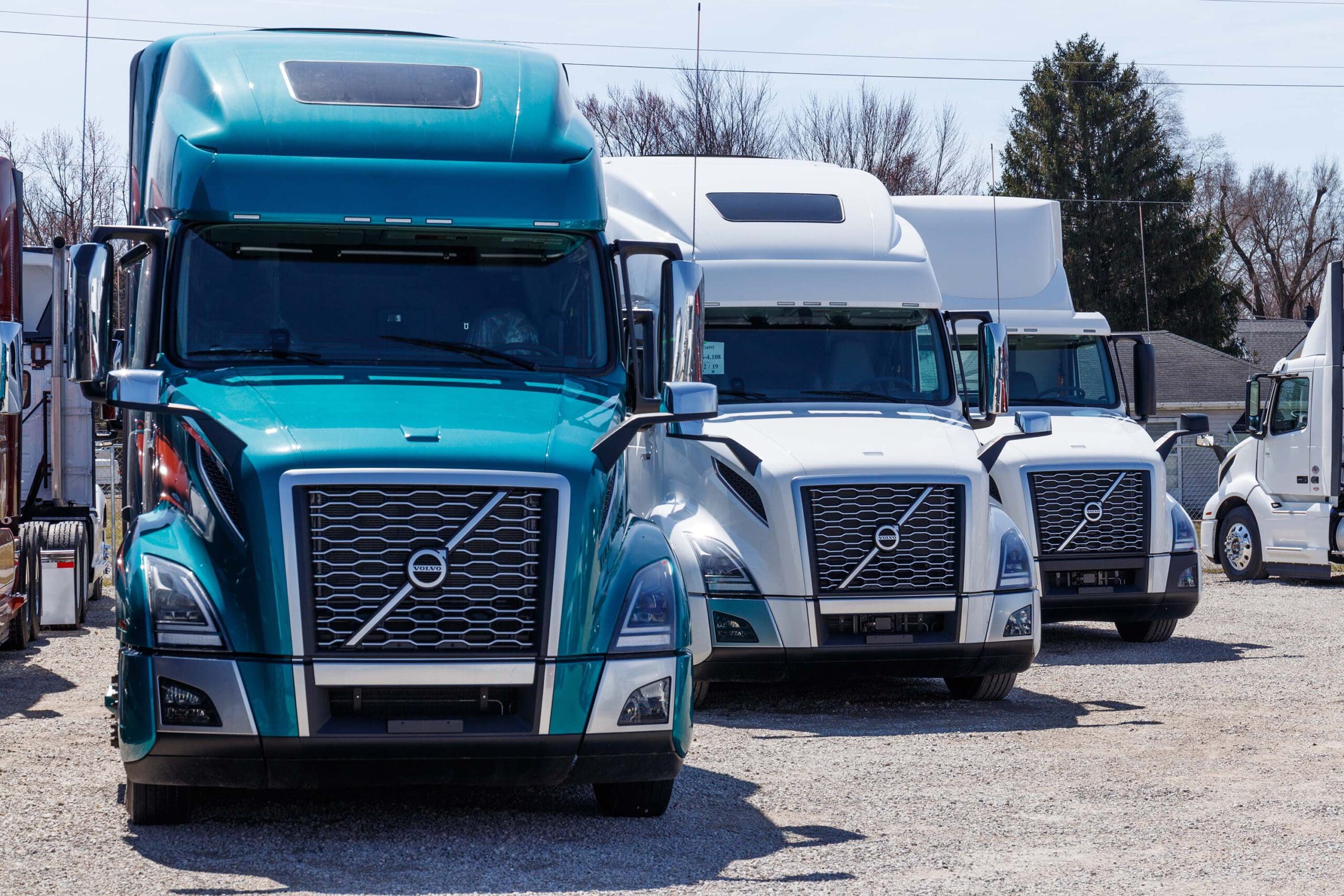
The Sweden-based automaker talks a big game about clean transport and ambitious electrification goals. Volvo executives tout sustainability for all—and, to its credit, the company has made some real progress. But the numbers tell a different story. In 2023, just 1.4% of Volvo’s truck sales were electric, rising to 1.7% in 2024,  and by 2025 that percentage grew slightly to 2.0%. That means year after year,  98% of its vehicles continue to pump toxic emissions into the air. 

Volvo has proven that electric trucking is possible. Now it must scale this life-saving technology at the pace our world demands.
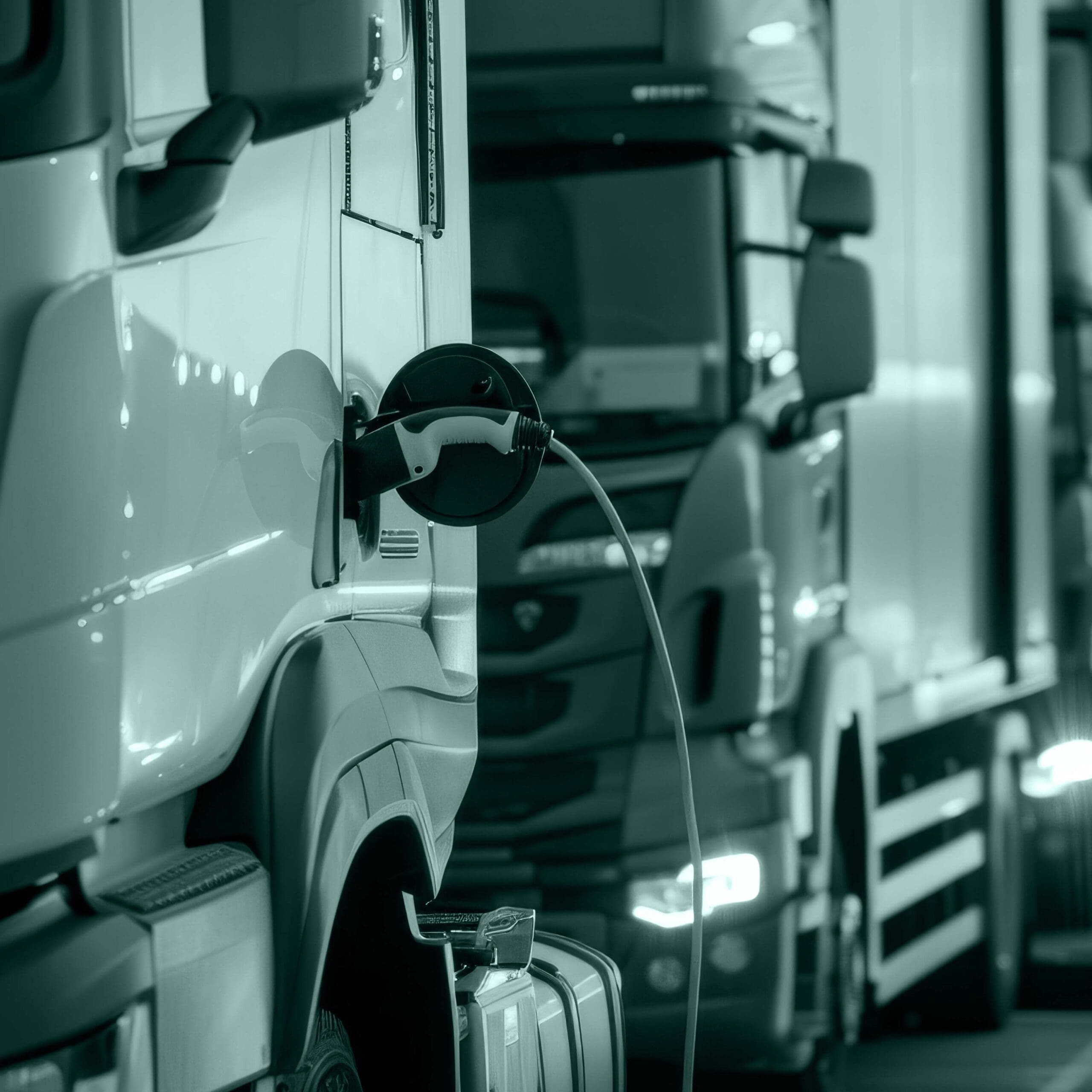
Volvo reality check

01
Volvo has the resources.

Volvo claims it can’t change gears, but even with a slight decrease from 2024,  it has more than enough money to accelerate the zero-emissions trucking industry with over 3 billion euros in annual profits in 2025. Instead of funding diesel engine plants and dead-end solutions, Volvo should invest in the electric transition—and leverage its global reputation and influence to lead the charge. It’s the clear route forward.

02
Volvo has the technology

Innovative research and technological advancements have equipped Volvo to build clean, zero-emission trucks that work across regions and fit diverse needs. They have the tools, talent, and resources. What’s missing? Corporate will. 

03
Volvo hides behind the fine print

Volvo promotes fossil-free technology, while investing heavily in biofuels and diesel, and building trucks powered by fuel cells and “low-carbon” sources. Simply saying your technology is “100% fossil-free” doesn’t make it true. 

Commitments vs. Actions

Volvo makes ambitious climate promises while its business decisions tell a different story. Despite pledging to lead the transition to zero-emission trucks, Volvo’s actions prove otherwise.

Commitments

Actions

  • 95% of Volvo’s emissions come from the vehicle use phase, yet electric vehicles represent only 2% of its total sales [X]Volvo 2025 Annual Report

  • In 2025, Volvo achieved only an 10% reduction in truck emissions per vehicle kilometre against its 40% target for 2030 [X]Volvo 2025 Annual Report

  • Postponed its battery cell plant in Mariestad, Sweden by 12-24 months with production expected to begin AFTER 2030 [X]Volvo 2025 Annual Report

  • Invested SEK 7 billion (~$ 635 million euro) in a new diesel truck plant in Mexico to be operational by 2026 [X]Freight Waves, March 2026

  • Acquired a conventional truck cab factory from CVG for SEK 410 million (~$41 million) [X]Volvo 2025 Annual Report

  • 1% reduction on R&D spending for low / zero emission technologies (26%) vs 7% increased R&D spending on “neutral” projects, also understood as improvement on current diesel portfolio (37%) [X]Volvo 2024 Annual Report p.19 & Volvo 2025 Annual Report

  • Electric trucks in North America are priced up to $80,000 higher than in Europe—excluding potential trade and tariff impacts, which may further affect costs [X]California Air Resources Board, October 2024

  • Continued to use lobbying power and influence to oppose clean truck regulations in the United States, including suing California, and to weaken emission standards in Europe.

It’s time to shift to electric

Electric trucks are ready to roll

By piloting electric trucks in every continent, Volvo has proven there’s a global market for these models—and they should be available right now. In fact, studies show that 65% of medium-duty and 49% of heavy-duty trucks could be electrified with existing technology. Battery prices have also plummeted by nearly 90% over the last decade.[X]NACFE

Electric trucks are a smart investment

The billions Volvo has invested in diesel engine plants and conventional manufacturing will soon become stranded assets as the market shifts to electric. Today’s win is tomorrow’s loss—and Volvo’s choice to stall progress puts the entire company at risk. 

Electric trucks are a growth opportunity

The global market for replacing diesel trucks with battery-powered electric models could reach $320 billion by 2035,[X] Carbon Tracker, “Re-Fleeting Revolution,” February 2025, p. 4-5. with an 18.3% compound annual growth rate. Those are real profits for Volvo to seize if it commits to a zero-emission future. 

Electric infrastructure is not a roadblock

Volvo says charging stations and support are not keeping pace with electric truck production. Change isn’t easy, but Volvo must influence regulations, investments, and stakeholders—including its own investments—to collaboratively build global infrastructure. With Volvo’s diverse business, charging infrastructure could even boost the company’s own bottom line. 

Electric is the (only) answer today

Volvo now has a “three-path strategy” to reach net-zero emissions by 2040: hydrogen, biofuels, and batteries. But electric is the cleanest technology available to replace diesel. It’s the only cost-effective solution that can achieve near full circularity today. Hydrogen and biofuels might sound good, but ultimately? They’re far from ready, cause more health and environmental issues, and divert resources from scaling up to electric. 

Electric could promote social and environmental justice

A just transition must be designed in partnership with workers and communities affected by mining and supply chains. It must set safeguards to ensure sustainable practices, respect human rights, and establish clean grids to service electric trucks. A fair global transition also means no pollution transfer from one region to another. We have one chance to do this right. 

Volvo and Daimler logos

Big promises demand bold action

We’re calling on Volvo and Daimler to accelerate a just transition to electric trucks; one that protects jobs, respects workers’ rights, and supports communities to transition away from fossil fuels. Your voice matters. Demand clean trucks for healthier air, a safer climate, and a sustainable future.

We demand that Volvo and Daimler:
01

Accelerate to 100% new zero-emissions truck sales by 2040 worldwide

02

Advance a zero-emissions truck industry that works for all

03

Foster the infrastructure and ecosystem needed to scale

Learn More

Latest Volvo Group News

View all
News
European truckmakers risk undermining EU industrial security with push to weaken CO₂ targets

European truckmakers risk undermining EU industrial security with push to weaken CO₂ targets

Europe’s largest truck manufacturers are facing criticism after calling for the EU to carry out an early review of truck CO₂ standards and implying they should be weakened, with clean freight experts warning the industry is undermining market certainty needed to secure Europe’s industrial future.


Read More
Blog
Volvo under pressure after media exposé on climate lobbying

Volvo under pressure after media exposé on climate lobbying

Heavy transport is at a critical crossroads, but Swedish manufacturing giant Volvo Group seems more interested in moving the goalposts than winning the race. 

Read More
Blog
3 Ways Legacy Manufacturers are Keeping Fleets Locked Out of Affordable Electric Trucks

3 Ways Legacy Manufacturers are Keeping Fleets Locked Out of Affordable Electric Trucks

The U.S. trucking industry is under mounting pressure. Diesel prices have surged–recently hitting $5.64 per gallon–eroding margins and increasing the urgency to transition to electric vehicles. But while electrification offers a clear path forward, high upfront costs are slowing adoption.

Read More

We all need clean trucks, and we need them now.

We’re calling on Volvo and Daimler to accelerate a just transition to electric trucks; one that protects jobs, respects workers’ rights, and support communities to transition away from fossil fuels. Your voice matters. Demand clean trucks for healthier air, a safer climate, and a sustainable future.

I’m a climate champion

I live in a community affected by pollution

I’m a consumer

I’m a truck driver or small operator

I’m an auto worker