Skip to content

Latest Resources

Report
Trucking’s Tipping Point

Trucking’s Tipping Point

Heavy-duty transport has long been considered as one of the hardest sectors to electrify. Carbon Tracker’s analysis finds that this assumption is increasingly at odds with the economics of commercial freight. Falling battery costs, manufacturing scale and improving operating economics are bringing battery-electric trucks towards total cost of ownership (TCO) parity with diesel across major markets, with key tipping points expected by the early 2030s. Once parity is reached, adoption is unlikely to proceed gradually. The analysis indicates that electric truck sales can accelerate rapidly along a non-linear S-curve, creating transition risks for manufacturers with large exposures to internal combustion technology and opportunities for companies better positioned for an increasingly electric market. China provides an early indication of the speed at which this transition can unfold. Battery-electric trucks accounted for more than 30% of Chinese heavy-duty truck sales in 2025, up from around 1% in 2021, demonstrating how quickly market share can shift once commercial economics become favourable. Read the full report on Carbon Tracker's website.
Visit Resource
Report
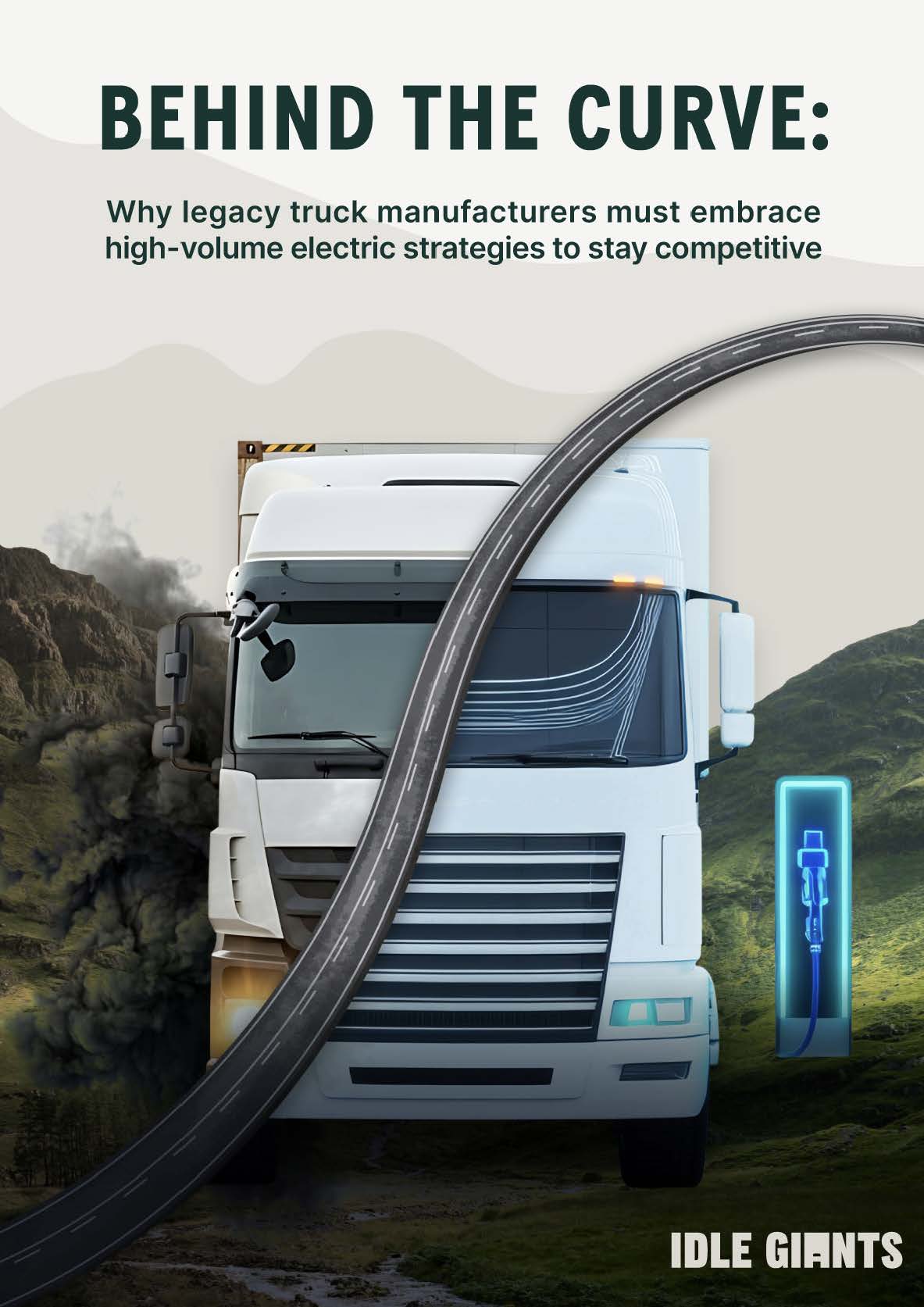
Idle Giants Report: Behind the Curve

Idle Giants Report: Behind the Curve

This report by Idle Giants finds that legacy heavy-duty truck manufacturers—specifically Daimler Truck, TRATON, and Volvo Group—are currently failing to secure their competitive futures by pursuing low-volume, high-price strategies for electric trucks. Established manufacturers have the financial strength and engineering expertise to compete, but their current strategies are narrowing their path to doing so. In particular, how they price and invest in electric trucks is limiting their ability to build necessary scale, while their policy advocacy is undermining government support that could help them achieve it.
Read More
Data
Upfront Pricing of eHGVs: Risks and Opportunities for Electric Truck Uptake

Upfront Pricing of eHGVs: Risks and Opportunities for Electric Truck Uptake

ERM finds that the price gap between electric and non-electric trucks sold by Europe’s largest manufacturers (Volvo Group, Daimler Truck, DAF, MAN and Scania) cannot be explained by manufacturing costs alone. While electric truck components are more expensive, the report shows that the other costs added to the final price are roughly twice as high as on non-electric models, even though they are structurally similar.

Visit Resource
Analysis
Brazil: Leapfrog to electric

Brazil: Leapfrog to electric

Accelerated electric vehicle (EV) adoption in Brazil could save up to US$¼ trillion (R$ 1.39 trillion) in cumulative fossil fuel import costs through 2050, reduce deaths from pollution, and avoid at least US$75 billion in climate damages.

Visit Resource
Report
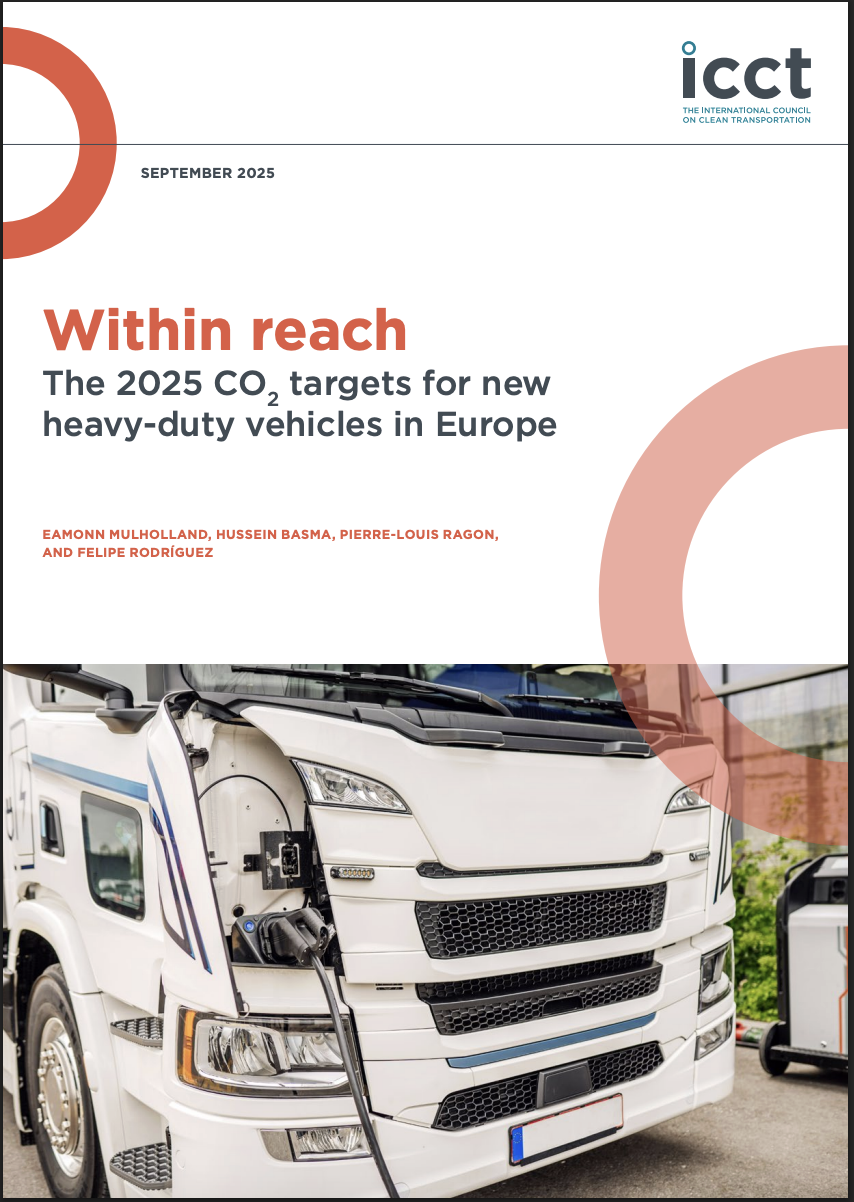
Within reach – The 2025 CO2 targets for new heavy-duty vehicles in Europe

Within reach – The 2025 CO2 targets for new heavy-duty vehicles in Europe

EU heavy-duty vehicle manufacturers must cut average CO2 emissions by 15% in 2025 compared to 2019 levels. This report assesses the progress and compliance efforts of the top seven EU HDV makers, using recent data on conventional and zero-emission vehicle registrations.

Visit Resource
Analysis
Battery electric commercial vehicle pricing in the US

Battery electric commercial vehicle pricing in the US

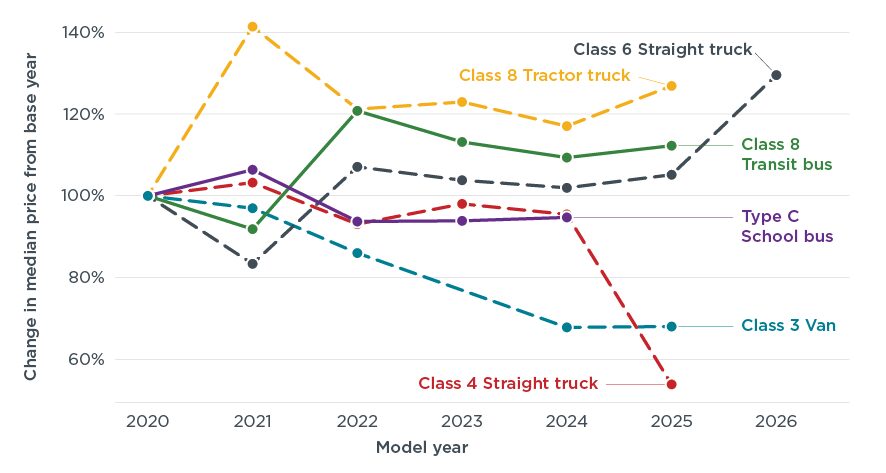
A new ICCT analysis finds that prices for large battery-electric trucks in the U.S. have risen since 2020, even as battery costs fall, while prices in the EU have generally declined. The report calls for greater price transparency to help fleets and financiers make informed decisions and support a sustainable electric vehicle market.

Visit Resource

We all need clean trucks, and we need them now.

We’re calling on Volvo and Daimler to accelerate a just transition to electric trucks; one that protects jobs, respects workers’ rights, and support communities to transition away from fossil fuels. Your voice matters. Demand clean trucks for healthier air, a safer climate, and a sustainable future.

I’m a climate champion

I live in a community affected by pollution

I’m a consumer

I’m a truck driver or small operator

I’m an auto worker