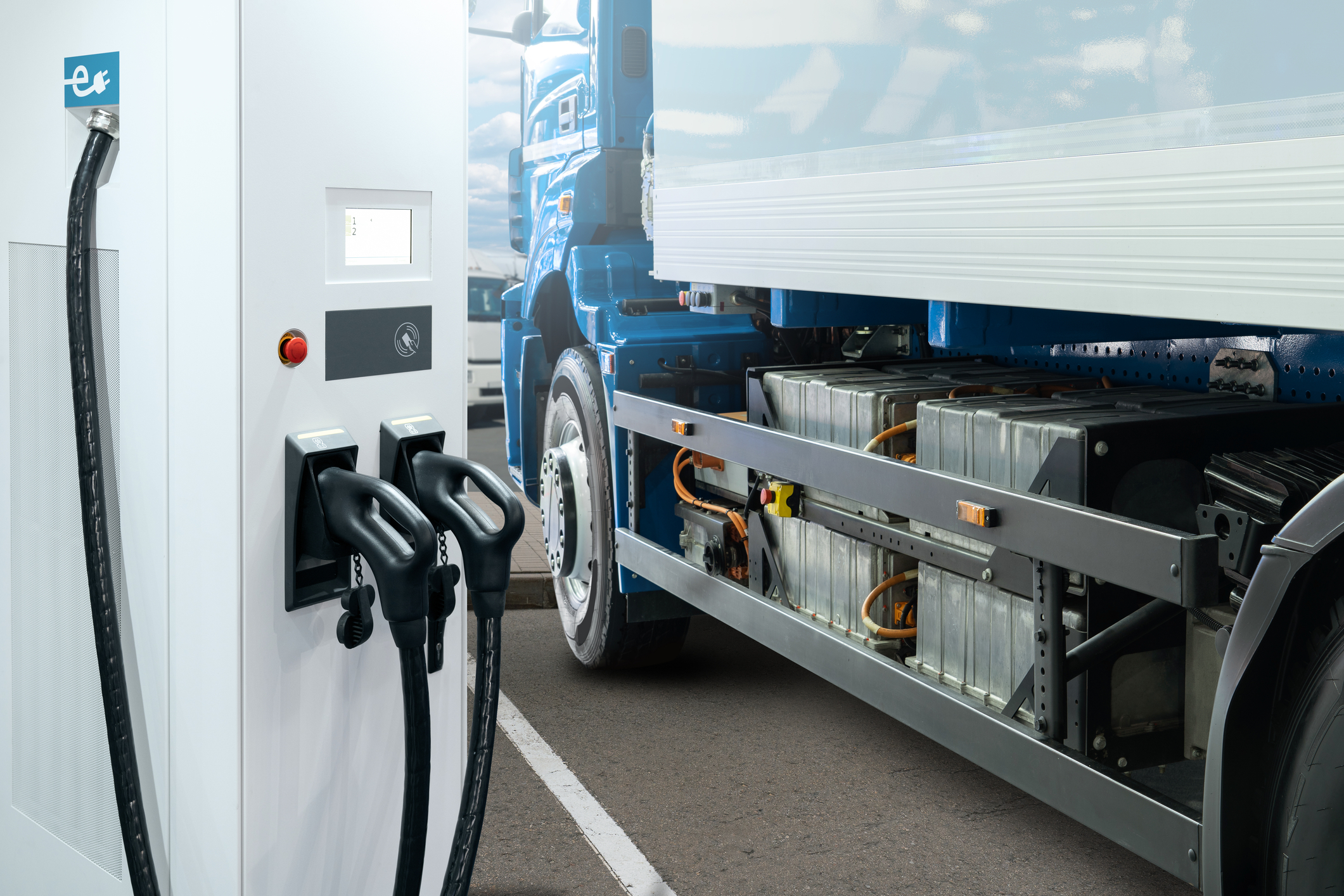
The order shows the demand for electric trucks from businesses and operators amid skyrocketing diesel prices and will be a big boost to efforts to address deadly air pollution. The bulk procurement process organized by Smart Freight Center and Catalyst Mobility (formerly Calstart) enabled the operators to use their purchasing power to buy the trucks at more competitive prices.
The 2,500 electric trucks will be operated by participating carriers to fulfill aggregated demand from over 15 major shippers involved in the ZET SCALE Alliance. The overall 10,000 truck order will transform the landscape for electric trucks: last year, just 875 zero-emission heavy electric trucks were registered in the U.S., down from 1,103 in 2024.
All truck manufacturers offering Class 8 electric trucks in North America were invited to participate in the bidding process. Tesla was selected as the winner after truck makers were evaluated on price, range, charging capabilities, and production capacity.
A separate study by the International Council on Clean Transportation (ICCT) found that electric trucks from legacy manufacturers cost more while delivering roughly half the range of the Tesla Semi Long Range. These advantages positioned Tesla as the strongest fit for the operators’ operational and commercial requirements. Tesla announced it will open its Nevada factory on September 24, signalling momentum for electric trucks in the U.S.
Investors this year questioned strategies by Daimler, Volvo Group and International Motors (owned by TRATON) aimed at stopping and delaying moves towards electric trucks, as seen in their lobbying and lawsuits. Truck manufacturers have largely been ignoring the competitive risk: in their AGMs this year, both Traton and Daimler downplayed or refused to respond to questions about competitive risk of new entrants.
While clean transport advocates welcome today’s order announcement, they warn that other truck manufacturers must step up to serve the needs of the trucking industry – or risk getting left behind. A recent ERM report found that for European manufacturers, non-component costs added to the final price are roughly twice as high as on non-electric models – a pricing model that is significantly constraining their addressable market.
While electric truck prices remain too high, another major problem is secrecy on pricing which gives manufacturers another lever to manipulate the market. ICCT research reveals that despite battery costs dropping globally, the median price of Class 8 battery-electric tractors in the U.S. increased 27% since 2020. By keeping electric truck prices high and opaque legacy manufacturers are stifling demand while they continue to sell high margin diesel trucks. A new California bill – just signed by Governor Gavin Newsom – aims to tackle this issue by forcing manufacturers to disclose information on the price of vehicles as a condition of receiving state subsidies.
A recent report shows electric truck sales globally are surging, but that China accounts for 88%, raising concerns that the U.S. is lagging behind logistics technology and remaining bound to high costs for fuel and maintenance. In 2025 just 3.1% of heavy vehicle sales in the U.S. were electric – compared to 25% in China. The U.S. saw over 25,000 electric heavy vehicles sales last year while China had over 450,000 heavy electric vehicle sales.
Guillermo Ortiz, Senior Clean Vehicle Advocate, NRDC:
“Fleets are tired of the financial whiplash from unpredictable diesel prices, and the ZETScale announcement is a clear sign that buyers are ready to move. This order is a massive wake-up call for the market. The buyers are here with real purchasing power, and legacy manufacturers need to read the room and step up before they lose their competitive edge. If the whole industry acts to realize this opportunity, we can secure American leadership in zero-emission freight and deliver the clean air our communities deserve.”
Katherine Garcia, Clean Transportation for All Director, Sierra Club:
“This historic 10,000-truck order should be a wake-up call to every legacy truck manufacturer that they must meet the demand for lower-cost electric trucks at scale to help ensure cleaner air to communities along freight corridors. This partnership will benefit fleets that are eager to cut maintenance costs and break free from volatile diesel prices, which are at a record high right now. Truck manufacturers must recognize this critical moment and urgently deliver affordable electric truck models.”
Craig Segall former Deputy Executive Officer and Assistant Chief Counsel of the California Air Resources Board:
“California fleets are ready to go electric, and this landmark order proves the demand is undeniably there. But to scale up, California needs truly affordable electric trucks. With SB 1213 encouraging price transparency from manufacturers, we can break through artificial markups and make zero-emission freight accessible to everyone.”
Ray Minjares, Heavy-Duty Vehicles Program Director, The International Council on Clean Transportation (ICCT):
“Truck electrification makes business sense with today’s historically high diesel fuel prices. This largest ever order for electric trucks will save money for fleets and their customers.”
Mary Peveto, Executive Director, Neighbors for Clean Air:
“Record-breaking fleet orders make one thing clear- businesses want affordable electric trucks. It’s tragic to watch Oregon lose local manufacturing jobs with Daimler closing its Portland operations, especially when the demand for zero-emission freight is right in front of us. Daimler should be building and selling those electric trucks right here in Oregon and our leaders need to pass smart policies that keep manufacturing alive and affordable in our own backyard.”
Rustam Kocher, industry consultant and formerly of Daimler Truck North America:
“Having spent years working inside the industry to accelerate fleet electrification, seeing legacy manufacturers like Daimler backslide on their zero-emission commitments is both shocking and deeply disappointing. The market is moving to full electrification, with or without them. By ceding major bulk procurement wins and pivoting back to legacy diesel, Daimler is missing a monumental market opportunity and risking its competitive edge as the global shift toward electric transport accelerates.”
Katherine Roboff, Deputy Director of External Affairs, WRI’s Electric School Bus Initiative:
“This purchase is the type of transformative deal that shows what’s possible when key market players come together to innovate. Upfront purchase prices remain among the biggest barriers to electrifying the medium-and-heavy-duty vehicle sector. By bringing buyers together at scale, ZETScale shows how aggregated procurement models can drive down costs while delivering cleaner air for us all.”
Stef Cornelis, Director Electric Fleets and Freight Programme, Transport & Environment:
“This is a significant missed opportunity for legacy truck manufacturers. The industry claims there is a lack of demand, yet its biggest players have just missed out on what could be the largest electric truck order in US history. That disconnect should be a wake-up call. Instead of investing at the pace needed to compete, European truck makers have prioritised weakening the regulations that would speed up the investment they need to remain industry leaders against Tesla and Chinese truckmakers. If legacy manufacturers are serious about making electric trucks affordable at scale, they need to back that ambition with action: supporting regulations like the CO2 standards that create long-term demand certainty and increasing investment in the technologies and production capacity needed to bring costs down.”
Ben Scott, Head of Energy Demand, Carbon Tracker:
“The global electric truck market is set to take off by the end of the decade. The transition to clean freight cannot move at the pace of the industry’s slowest players — and truck makers cannot assume the market will wait for them to catch up. Maintaining ambitious truck CO₂ standards are critical to support innovation, bring down prices for hauliers, protect European manufacturing jobs and keep the industry competitive.”
Tobias Nissen, Industry Programme Lead, Nordic Center for Sustainable Finance:
“Investors at Volvo and Daimler Truck raised concerns about competitiveness earlier this year, only to see those concerns largely brushed aside. Missing an order of this scale should be a reality check. Truckmakers are repeating the mistakes of the light-duty sector- underinvesting in electric, fighting the regulations that create demand, and putting billions in shareholder value at risk. Investors must push management to change course, stop lobbying against the market signals that drive scale, invest to compete, and protect long-term value.”
Merlin Jonack, Transport Policy Officer, NABU:
“Daimler lobbied against the policies driving America’s electric truck market, announced its retreat from parts of that market. Now, it is missing out on one of the biggest electric truck orders to date and cutting hundreds of jobs. Industrial leadership and jobs cannot be taken for granted. If Daimler wants to protect jobs and drive industrial growth at home, it needs to make the investments required to compete in the technologies shaping the future of trucking. Germany invented the truck 130 years ago. Whether it leads in the next era will depend on the choices its manufacturers make today.”
Anna Linell, New Weather Institute Sweden:
“Instead of competing for the future of trucking, Volvo Group has been at the forefront of efforts to weaken the clean-truck rules that create demand and protect Americans’ right to clean air. Now it appears to have missed out on the largest electric truck order in US history. Volvo urgently needs to change course- stop lobbying against regulations, including Europe’s CO₂ standards and focus on winning the growing market for clean trucks rather than slowing it down.”