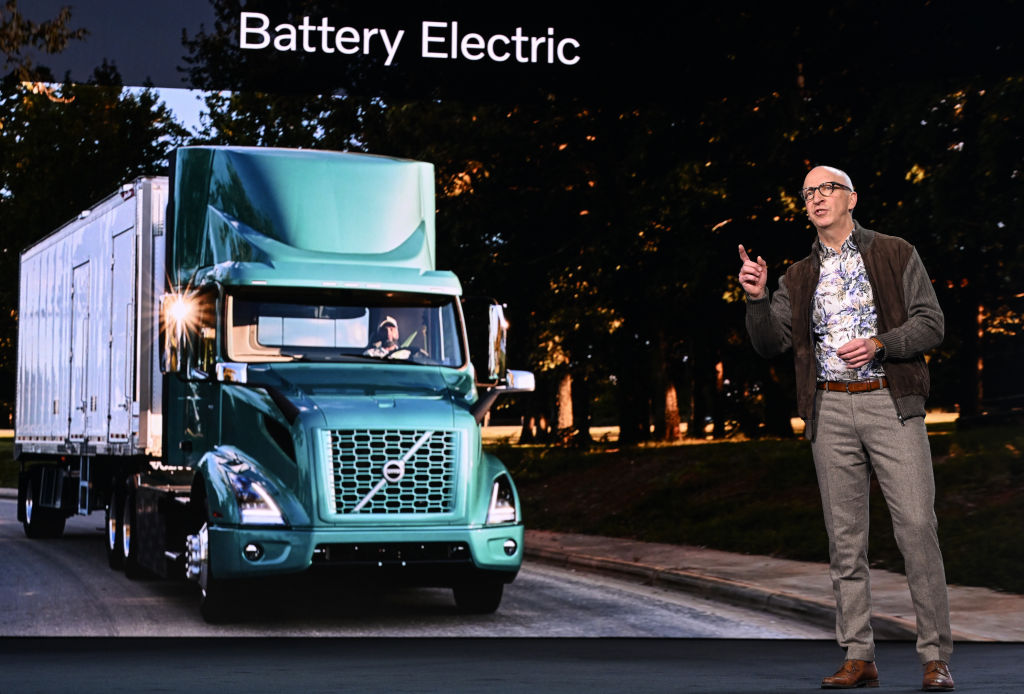
The targeted amendment was adopted in the European Parliament today, introduced without a formal impact assessment and mirrors demands made in a leaked joint letter last year from Volvo Group, Daimler Truck, Scania, IVECO, Ford and MAN. In that letter, manufacturers explicitly requested the ability to “generate credits independent of the artificial CO2 reduction trajectory”, effectively easing their compliance obligations before 2030.
While the Commission maintains that the 2030 targets remain unchanged, relaxing the compliance pathway between 2025 and 2029 allows manufacturers to bank surplus credits now and dilute the real-world impact later. According to clean freight experts, this could cut zero-emission truck sales by 27% in 2030 and the equivalent of 25,000 missing clean trucks on Europe’s roads.
Some of the biggest players in freight and logistics say they want clean, affordable trucks. Zero-emission trucks offer fleets protection from fuel shocks and lower total cost of ownership over time and electric trucks are expected to become the cheapest powertrain in all use cases by 2030 in Europe assuming policies remain in place. Relaxing the rules increases exposure to precisely the risks the manufacturers should be hedging against.
Zero-emission truck sales are accelerating (with electric truck registrations almost doubling in just the last year) and infrastructure investment expanded to to support almost four times the number of electric trucks currently operating on European roads, regulatory backtracking sends a destabilising signal to fleets, suppliers, utilities, and investors who are committing billions to electrification.
The global truck market is moving decisively toward electrification, in Europe, registrations of electric trucks have almost doubled in the last year. Chinese manufacturers are rapidly scaling battery-electric truck production and have signalled plans to enter the European market from 2026, with models expected to be significantly cheaper than current European offerings.
Meanwhile, Europe’s largest manufacturers are slow to follow, Germany’s Daimler Truck, Sweden’s Volvo Group are Europe’s largest manufacturers owning almost half of the European heavy-duty truck market (18% and 23%, respectively as of Q1 2025). Rather than expanding production and backing regulations that support demand, truck manufacturers are slowing Europe’s transition, risking the loss of technological leadership, competitiveness, and their own long-term strength in the market.
Volvo and Daimler have used a similar playbook in the United States, where both companies supported efforts to delay clean truck rules and filed a lawsuit against California regulators under the Clean Trucks Partnership framework. More than 50,000 people worldwide called on them to drop those efforts and accelerate electric truck deployment. The pattern of lobbying for delay is now repeating in Europe.
The Heavy-Duty Vehicle Regulation already includes a scheduled review in 2027. Clean freight experts emphasise that Europe must underline the progress already made:
- Maintain the long-term CO2 targets (a 45% reduction by 2030 and 90% by 2040)
- Keep the 2027 review in place and prevent early review.